
(Expert insights from someone who has lived the EDI trenches)
If you’ve ever supplied to a large retailer, you already know the truth — the opportunity is massive, but the expectations are even bigger. Retail giants operate like clockwork, and anyone who wants to be part of their ecosystem must adapt to their rhythm.
And in today’s retail world, that rhythm is powered by two things:
EDI compliance and tight SLAs.
As someone who has spent years helping manufacturers, distributors, and 3PLs navigate EDI and integration challenges (often stepping in as a Cleo support partner or a Globus-led Cleo cloud integration partner), I’ve seen how easily suppliers slip into chargebacks, delays, and strained relationships simply because their EDI processes weren’t built for retailer-grade scale.
This guide breaks down everything manufacturers and suppliers need to know — in plain English — to stay compliant, stay competitive, and stay in their retailer’s good books.
Top Retailers You’re Likely Working With
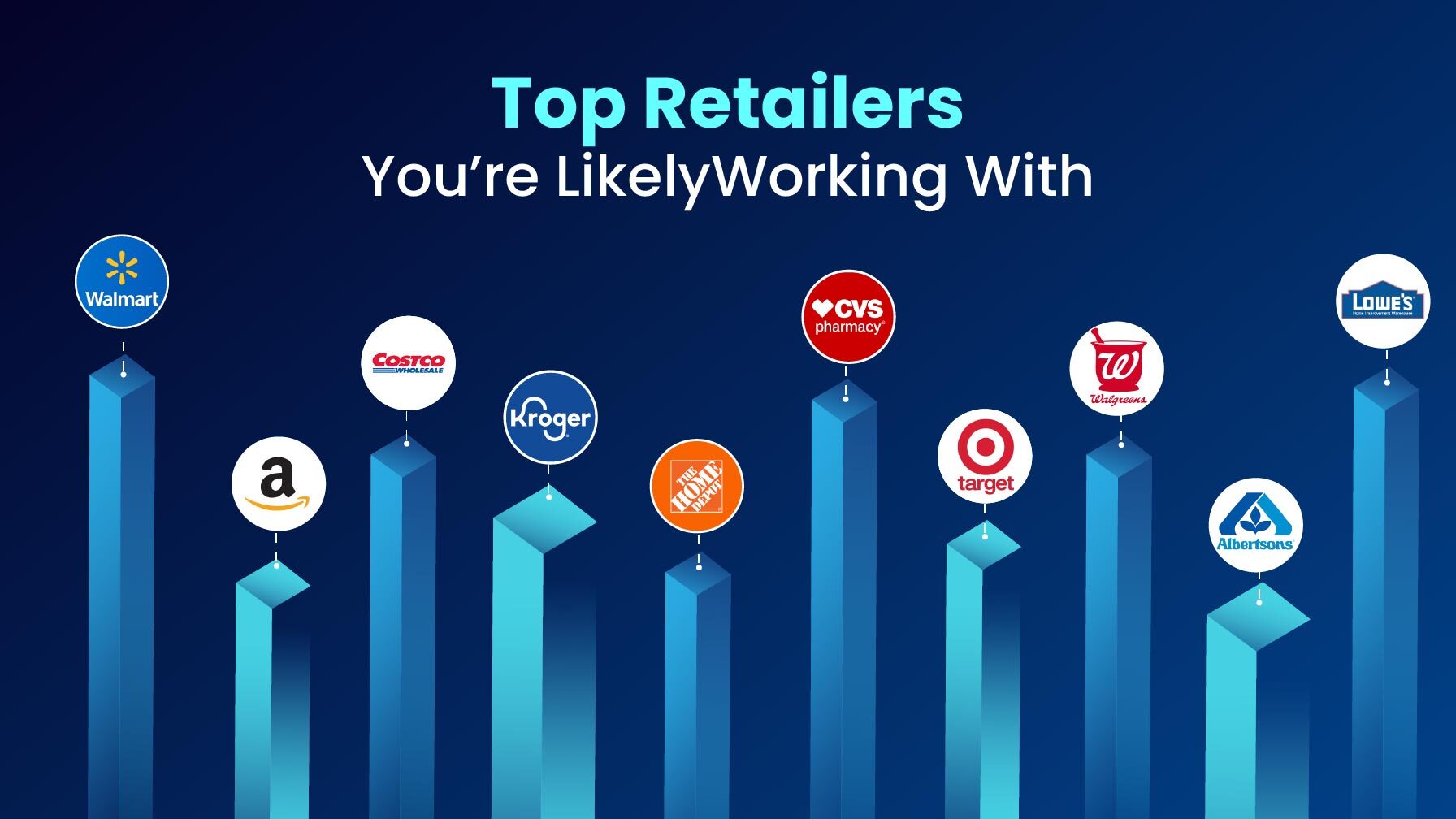
No numbers needed — you already know these names:
Walmart
Amazon
Costco
Kroger
Home Depot
CVS
Target
Walgreens
Lowes
Albertsons
Different industries, different models — but nearly identical expectations when it comes to EDI, SLAs, and operational discipline.
Why Partnering With Large Retailers Is a Game-Changer
Landing a big retailer is not just a revenue boost — it’s a business transformation. A few reasons why:
Bigger Reach, Bigger Credibility
Top retailers introduce your products to millions of customers. A single distribution center can generate more visibility than months of traditional marketing.
Industry-Level Trust
If a retailer trusts you, every other stakeholder — investors, distributors, resellers — will too.
Predictable Demand & Revenue
Large retailers plan seasonally and forecast accurately. That means you can optimise production, stock, logistics, and working capital.
Data You’d Never Get Otherwise
Retailers share sell-through data, forecasts, and insights that can completely reshape your product, pricing, and supply chain strategy.
Opportunities for Innovation
Big retailers often co-create new product lines with their suppliers — a win-win for both.
What Retailers Expect From You (The Non-Negotiables)
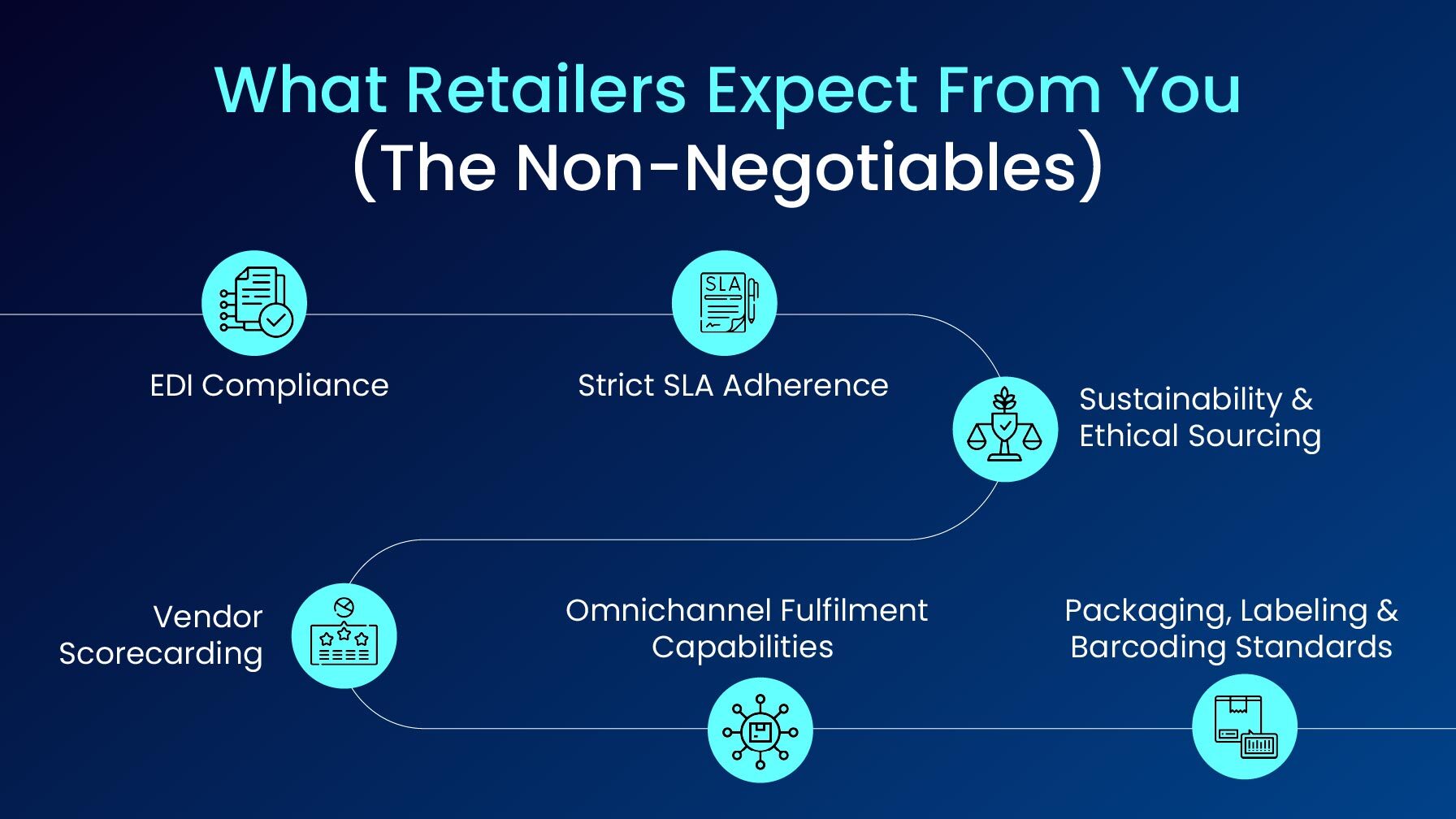
Having supported many suppliers as a Cleo support partner and as a Globus-integrated Cleo cloud integration partner, these are the requirements I see everywhere:
- EDI Compliance
Retailers standardize EVERYTHING through EDI.
POs, ASNs, invoices, item catalogs — all must match their formats, their timelines, and their SLAs.
One missing field or late ASN can easily result in:
- chargebacks
- delayed payments
- rejected shipments
- damaged vendor scorecards
- Strict SLA Adherence
SLAs are the backbone of retail operations.
Typically they cover:
- on-time delivery
- fill rate
- inventory accuracy
- invoice timelines
- response time for order acknowledgements
Retailers expect consistency, not excuses.
- Vendor Scorecarding
Retailers measure everything:
- accuracy
- timeliness
- order acceptance rate
- delivery performance
- ASN compliance
Low score?
You risk losing shelf space, volume allocations, or even the partnership.
- Omnichannel Fulfilment Capabilities
Retailers today expect suppliers to support:
- eCommerce
- in-store
- drop-ship
- marketplace orders
This means your EDI, ERP, and WMS must talk to each other — seamlessly.
- Packaging, Labeling & Barcoding Standards
If your cartons don’t scan or match their GS1/SSCC standards, you’re headed straight for chargebacks.
- Sustainability & Ethical Sourcing
Retailers (Costco, Target, etc.) increasingly demand:
- sustainable materials
- traceability
- labour compliance
- environmental certifications
It’s now part of doing business.
Why EDI Matters More Than Ever
For suppliers, EDI is not just “compliance”.
It’s your operational lifeline.
A modern cloud EDI setup helps you:
- automate order cycle
- eliminate manual entry errors
- maintain SLA accuracy
- sync inventory with retailers
- trigger real-time alerts
- avoid delay penalties
Retailers depend on updated EDI flows to keep shelves stocked and supply chains running predictably.
A single delayed ASN or incorrect invoice can trigger a domino effect across their network — which is why they impose penalties so aggressively.
Common EDI Documents Suppliers Must Comply With
A few essentials:
Order Responses (EDI 855)
Retailers expect confirmations with status, quantity, exceptions, or backorder details.
Advanced Ship Notices (EDI 856)
The most crucial document — controls receiving, unloading, routing, and billing.
Invoices (EDI 810)
Must follow retailer billing rules and match item, quantity, and pricing exactly.
Every one of these comes with retailer-specific SLAs — miss them, and the penalties stack fast.
What Makes SLAs Hard to Meet?
From my experience supporting suppliers across industries, the common root causes are:
- inventory data inaccurate or outdated
- no real-time order visibility
- disconnected ERP/WMS/EDI systems
- manual workflows
- overloaded teams
- system outages
- upstream supply delays
The truth?
Missing an SLA rarely happens because a supplier “doesn’t care.”
It happens because systems aren’t connected well enough to keep up.
This is where strong EDI integration — supported by the right Cleo support partner or a Globus-led Cleo cloud integration partner — becomes a game-changing advantage.
The Modern Solution for Retail SLA Management
Retailers move fast.
Suppliers need tools that move faster.
That’s why many organisations now rely on proactive SLA tracking tools that provide:
- real-time alerts
- anomaly detection
- integration visibility
- predictive analytics
- scorecards
- exception management
These platforms help suppliers identify issues before the retailer does — saving millions in chargebacks and relationship damage.
The Bigger Picture: Ecosystem Relationship Management
Today’s supply chains run on data and integrations — not just documents.
Modern ecosystem relationship tools give suppliers:
- a unified dashboard of all commitments
- control over SLAs
- partner-specific scorecards
- actionable alerts
- seamless API + EDI integration
- contextual insights for operations & revenue
This ensures teams are no longer reacting to issues — they’re preventing them.
Final Thoughts
Retail partnerships are high-stakes.
Retailers expect flawless execution, and the suppliers that thrive are the ones that:
- automate early
- integrate deeply
- monitor relentlessly
- stay SLA-accurate
- communicate proactively
With the right systems, EDI workflows, and support from an experienced team — whether through a Cleo support partner or a Globus-driven Cleo cloud integration partner — suppliers can build long-lasting, profitable relationships with major retailers.
Strong compliance isn’t just about avoiding penalties.
It’s about securing trust, ensuring predictability, and positioning your business for long-term growth.
