
A Globus-guided perspective for brands looking for a reliable Cleo support partner.
ERP migration is supposed to be an exciting leap forward. Yet for many businesses, it turns into a maze of integrations, customizations, delays, and unexpected costs. And while replacing an outdated ERP with a modern, scalable system is a smart move, the process isn’t as straightforward as shifting data from Point A to Point B.
In today’s B2B ecosystem—where every order, invoice, shipment, and partner interaction depends on real-time, accurate data flow—your ERP migration can succeed only if your integrations are solid from Day One.
That’s where choosing the right Cleo support partner becomes mission-critical.
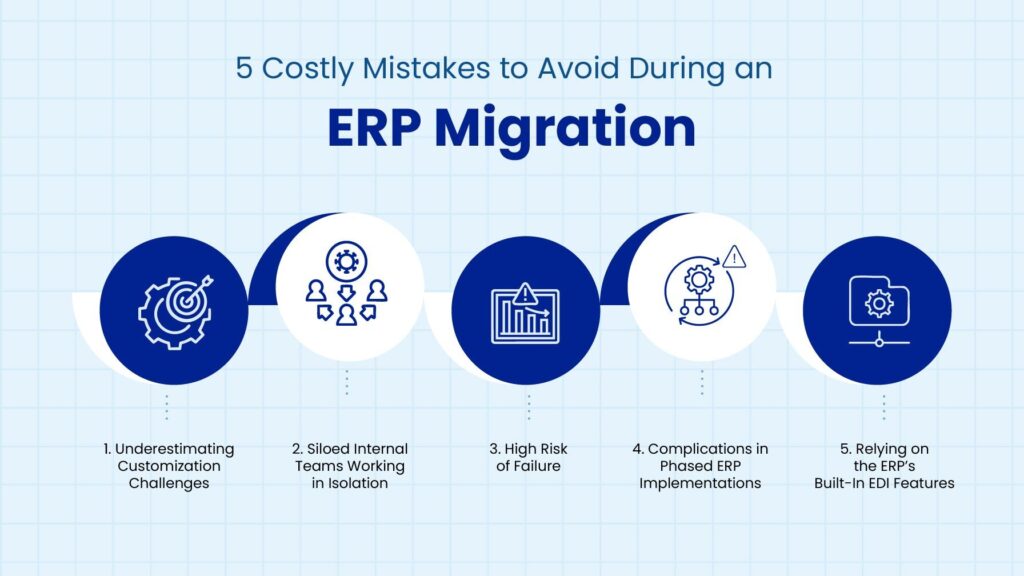
But before we get to solutions, let’s talk about the problems—specifically, the five most expensive mistakes businesses make during ERP migrations.
- Underestimating Customization Challenges
Not all ERPs are built equally, and not all of them fit your business out of the box. Customizations are often unavoidable—but they’re also the reason budgets shoot up, timelines get stretched, and integrations break.
When the core ERP lacks modern integration capabilities, teams end up building half-baked manual workarounds to connect ERPs with:
- EDI systems
- eCommerce portals
- WMS/TMS
- Partner APIs
- Finance & logistics touchpoints
These band-aid solutions quickly create data silos, mapping errors, missed SLAs, and unnecessary manual intervention.
The Globus Advice:
Start your integration planning early—preferably before you finalize the ERP vendor. A strong Cleo support partner will help you evaluate whether the ERP’s native tools can handle your B2B workflows or whether external Cleo cloud integration will future-proof the process.
- Siloed Internal Teams Working in Isolation
ERP migrations typically involve IT, operations, supply chain, finance, sales, and sometimes even external partners. But more often than not, these teams work independently—and that’s where integration gaps emerge.
When departments don’t collaborate:
- Existing customizations get overlooked
- New workflows contradict historical data flow
- Cross-department dependency is ignored
- Last-minute integration rework becomes unavoidable
What could’ve been aligned early turns into costly firefighting.
The Globus Perspective:
Bringing a Cleo support partner into the conversation early helps align each team’s integration needs and ensures nothing falls through the cracks.
- High Risk of Failure
ERP projects are infamous for one number: almost 50% fail on the first attempt.
Why?
Because businesses underestimate how deeply integrations impact day-to-day operations.
When data stops flowing, everything stops flowing—orders, invoices, shipments, acknowledgements, compliance documents, supply chain updates… everything.
The biggest culprit?
A migration plan built around ERP features but not around integration architecture.
A seasoned Globus Cleo cloud integration partner helps teams anticipate evolving integration needs and build a flexible, scalable foundation—so the ERP grows with your business instead of restricting it.
- Complications in Phased ERP Implementations
Most ERP migrations don’t happen overnight—they happen in waves. And while this reduces business disruption, it makes integration extremely tricky.
During phased rollouts, businesses often:
- Add new applications
- Replace existing systems
- Modify workflows
- Expand to new partners or platforms
Each change requires integration updates. Suddenly, your integration plan becomes a moving target.
If not managed well, this leads to:
- Rising implementation costs
- Continuous rework
- Integration mismatches
- Longer go-live cycles
Globus Tip:
Anticipate change. Build integration frameworks flexible enough to adapt—especially if Cleo cloud integration is at the center of your B2B ecosystem.
- Relying on the ERP’s Built-In EDI Features
This one is more common than you’d think.
Many teams assume the ERP’s built-in EDI module is “good enough”—until they realize it limits:
- Protocol flexibility
- Partner onboarding speed
- Data format support
- Scalability
- Visibility across order-to-cash and procure-to-pay cycles
ERP-tied EDI tools often break the moment you upgrade the ERP. And in an era of API-driven integration, they simply can’t keep up.
The smarter route?
Using a standalone EDI + API integration platform like Cleo, supported by an experienced Cleo support partner such as Globus Systems.
What this gives you:
- Reliable EDI, API, XML, JSON, and flat-file support
- Real-time visibility across all transactions
- Automated order, invoice, and load workflows
- Faster onboarding of partners
- Stronger error handling
- Secure & scalable communication protocols
- The option to choose managed, self-service, or hybrid models
What Companies Regret After ERP Migration
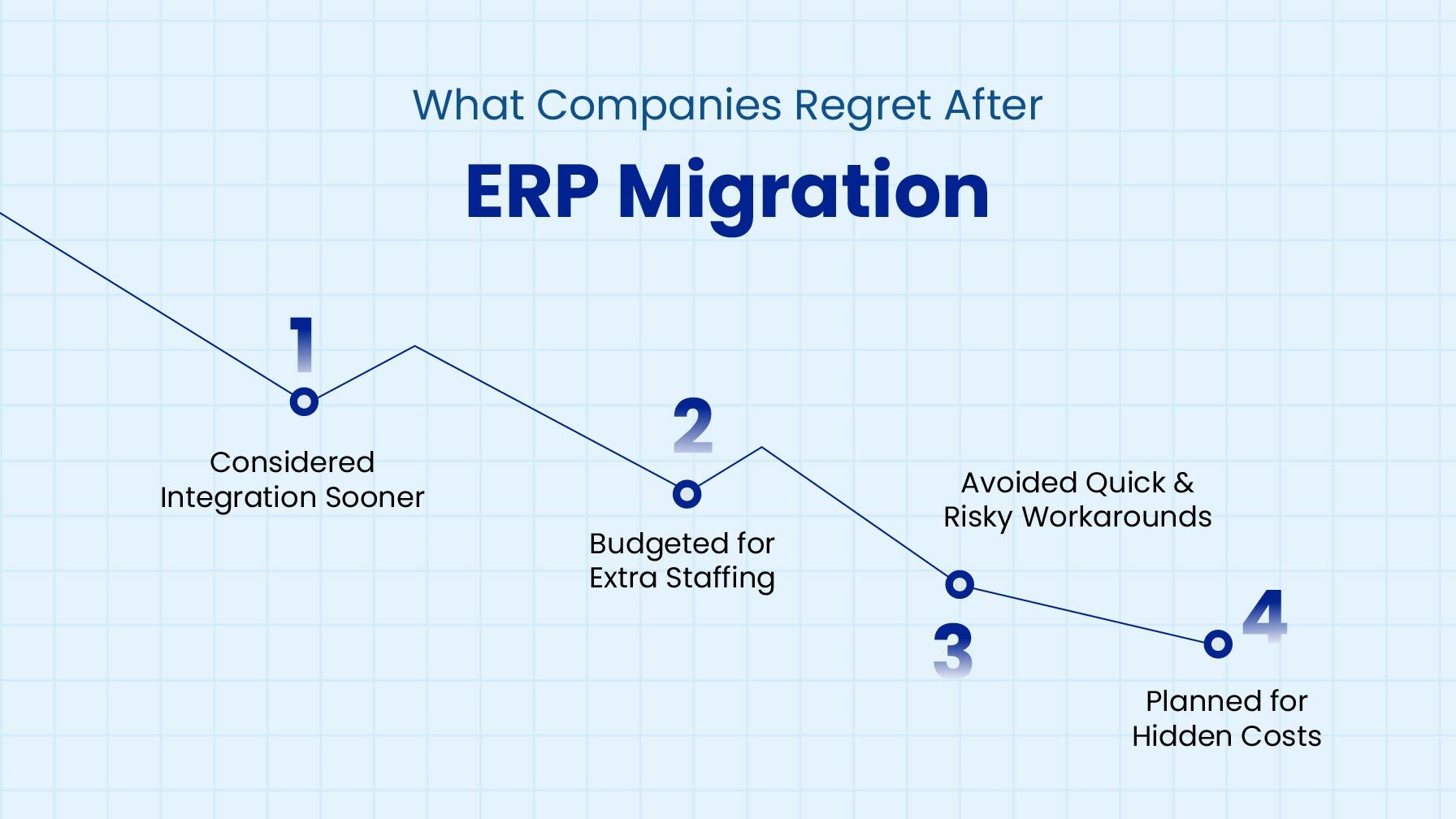
Businesses that complete ERP migration often look back and wish they had:
1. Considered Integration Sooner
Late integration planning = expensive rework, rushed decisions, and short-term fixes.
2. Budgeted for Extra Staffing
As integrations expand, workloads surge—and without preparation, teams get stretched thin.
3. Avoided Quick & Risky Workarounds
Speedy shortcuts might help you meet deadlines, but they introduce long-term vulnerabilities.
4. Planned for Hidden Costs
Licenses, middleware, consulting fees, unexpected partner requirements—these always appear when integration isn’t mapped properly.
Start Integration Planning Early — and Choose the Right Partner
ERP migration is complex, but the right Cleo support partner can simplify the entire journey.
At Globus Systems, we uniquely support ERPs by combining:
- Cleo cloud integration expertise
- Multi-protocol EDI proficiency
- Trading partner management
- 24/7 global support
- A deep understanding of ERP–EDI–API ecosystems
Whether you’re preparing for migration or already stuck in the middle of one, planning your integration strategy early and with the right partner ensures a smooth, cost-effective, future-proof outcome.
